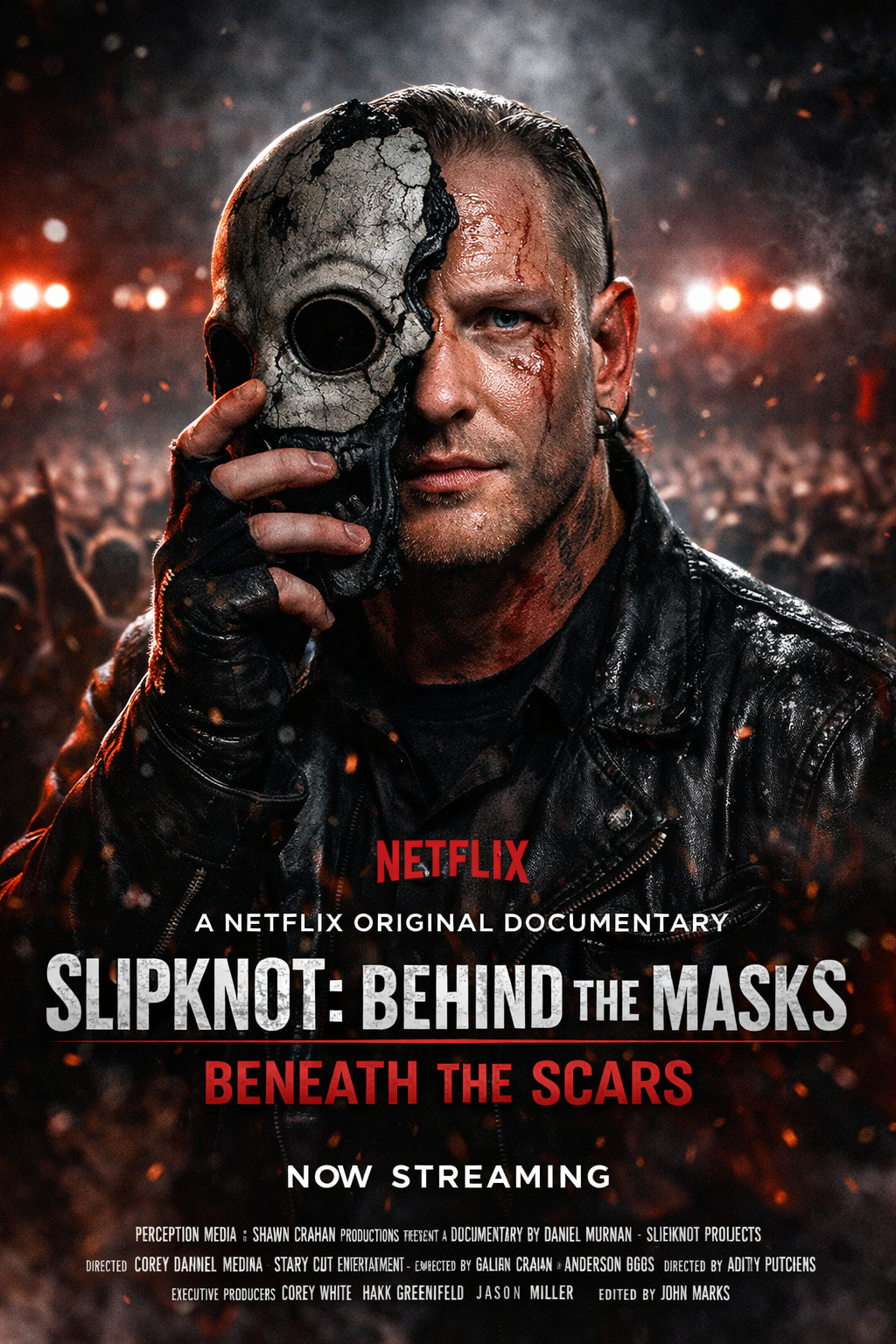
Behind the masks and layers of myth that have defined Slipknot for decades, a far more fragile and human story finally steps into the light. Behind the Masks, Beneath the Scars pulls back the curtain on the chaos to reveal Corey Taylor not as a metal icon, but as a survivor shaped by pain, resilience, and hard-earned truth. This unmasked narrative challenges everything fans think they know about the voice of one of metal’s most ferocious bands.
From the moment Slipknot emerged, anonymity became armor. The masks were designed to shock, intimidate, and erase individuality, allowing the music’s fury to speak louder than faces ever could. For Corey Taylor, however, the mask carried a deeper purpose—protection from a world that had already inflicted lasting wounds long before fame arrived.
Taylor’s childhood was marked by instability, abandonment, and an early exposure to darkness that would later fuel his songwriting. In this unfiltered revelation, he confronts those formative years with brutal honesty, acknowledging how trauma became both a curse and a catalyst. The anger that once felt uncontrollable eventually transformed into an outlet that saved his life.
Mental health has long been a shadow lurking behind Slipknot’s sonic violence, and Corey Taylor’s story stands at its center. Depression, addiction, and suicidal thoughts were not abstract themes but lived realities. The music became a scream for help, disguised as aggression, reaching listeners who were fighting battles of their own.
Fame, rather than healing these scars, initially deepened them. The pressure of success, relentless touring, and the expectation to remain endlessly unbreakable pushed Taylor further toward self-destruction. Behind the roaring crowds and sold-out arenas, isolation grew louder than applause.
In peeling away the mask, Taylor speaks candidly about hitting rock bottom and the moment he realized survival required change. Sobriety, self-reflection, and confronting buried pain marked a turning point—not just for him personally, but for the future of Slipknot itself. The rage remained, but it was no longer directionless.
This evolution reshaped his approach to music. Songs became more introspective, blending brutality with vulnerability, allowing emotion to coexist with aggression. Fans began to hear a voice that wasn’t just angry, but wounded, reflective, and searching for meaning beyond chaos.
Corey Taylor’s honesty also reframed Slipknot’s legacy. What once appeared as pure nihilism now reads as a testament to endurance. The band’s most violent moments were often cries for understanding, connecting deeply with listeners who felt unseen or unheard.
By sharing his truth, Taylor dismantles the dangerous myth that strength means silence. He challenges the metal community to confront mental health openly, proving that vulnerability does not weaken intensity—it sharpens it. In doing so, he becomes not just a frontman, but a voice for survival.
The unmasking also reveals gratitude—for fans who found comfort in the noise and for music that provided a lifeline when words failed. Taylor acknowledges that Slipknot became a shared refuge, where pain could be transformed into collective release.
Behind the Masks, Beneath the Scars is not about abandoning Slipknot’s darkness, but understanding it. The horror, rage, and chaos remain, now reframed as expressions of truth rather than spectacle. The mask no longer hides the pain; it tells its story.
In exposing his most haunting truth, Corey Taylor reminds us that even the loudest screams often come from the deepest wounds. Beneath the scars lies survival, and behind the mask stands a man who chose to live—and to make others feel less alone in the process.