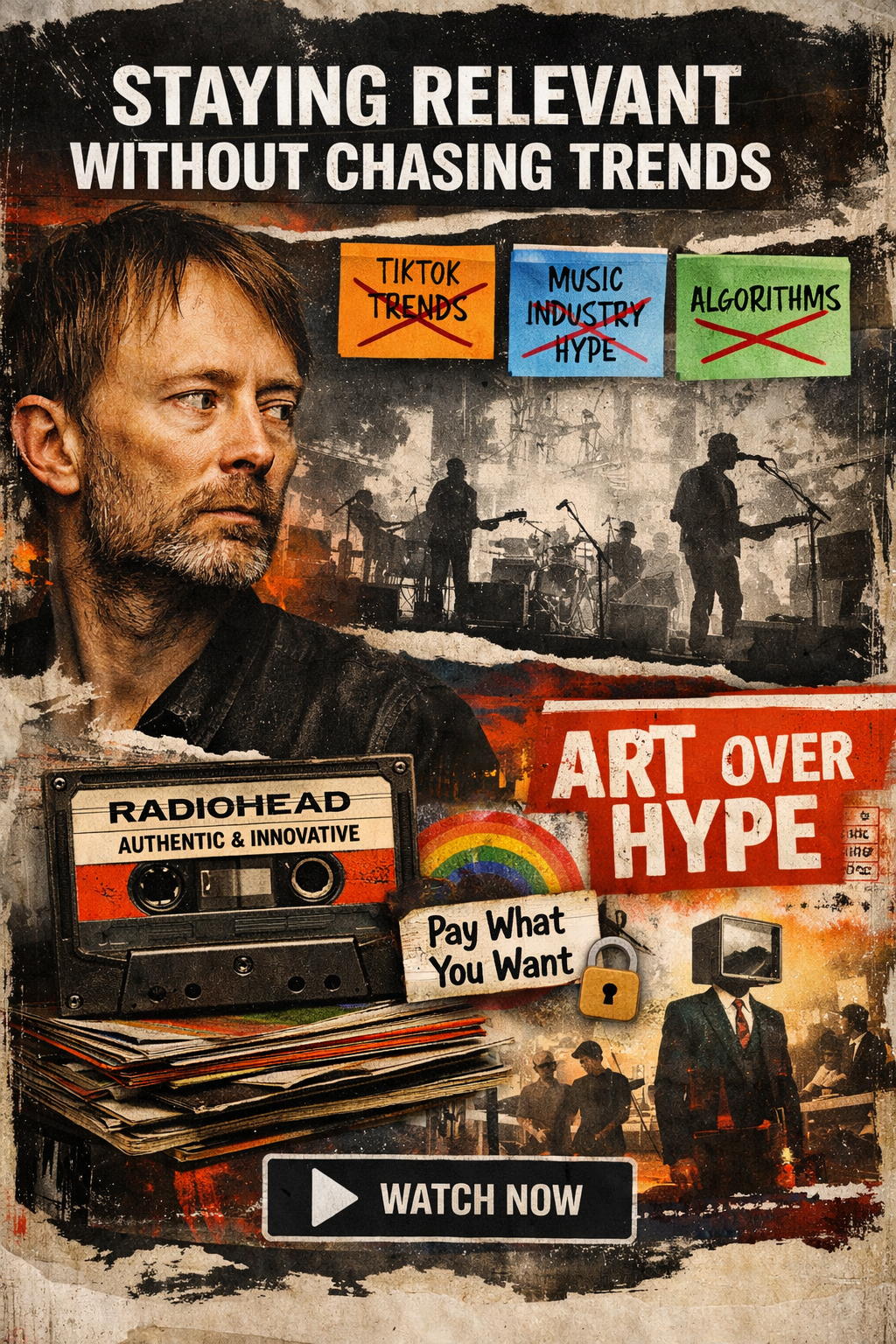
In an era where artists bend over backwards to keep up with TikTok sounds and streaming algorithms, Radiohead have done something quietly rebellious: they’ve refused to chase trends. Yet, decades after their debut, they remain one of the most relevant and respected bands in modern music. Their longevity isn’t accidental—it’s the result of deliberate artistic choices that prioritize substance over hype.
Radiohead’s relevance begins with their willingness to evolve on their own terms. From the guitar-driven angst of The Bends to the experimental electronics of Kid A, the band has never stayed in one lane for too long. Instead of following what was popular, they anticipated where music could go, often arriving there before the mainstream caught up.
What sets Radiohead apart is their comfort with risk. Many bands fear alienating fans by changing their sound, but Radiohead lean into that discomfort. When Kid A dropped, it confused and divided listeners—yet years later, it’s considered a masterpiece. That long-game thinking keeps their work timeless rather than tied to a specific era.
Another key to their relevance is authenticity. Radiohead don’t manufacture personas to fit the moment. Thom Yorke’s vulnerability, anxiety, and political unease feel real because they are real. Listeners sense that honesty, and it creates a deeper connection than any trend-driven image ever could.
Lyrically, Radiohead speak to universal fears that never go out of style: isolation, technology’s grip on humanity, environmental collapse, and emotional disconnection. These themes grow more relevant with time, making older songs feel eerily current. They’re not chasing today’s conversation—they’re writing about problems that refuse to disappear.
Radiohead also stay relevant by controlling how their music reaches fans. Their groundbreaking “pay-what-you-want” release of In Rainbows challenged the music industry long before artist independence became a buzzword. Instead of reacting to industry changes, they often force the industry to react to them.
Visually, the band avoids flashy, trend-heavy aesthetics. Their album art, stage designs, and visuals—often created with longtime collaborator Stanley Donwood—are unsettling, abstract, and deeply symbolic. This consistency builds a strong identity that doesn’t age the way trend-based visuals often do.
Radiohead also understand the power of scarcity. They don’t oversaturate the market with constant releases or endless social media noise. Long gaps between albums create anticipation and allow fans to fully live with each project. In a world of constant content, restraint becomes its own statement.
Importantly, the band doesn’t pander to nostalgia either. While many legacy acts survive by replaying their greatest hits, Radiohead continue to push forward. Even their live shows balance old favorites with newer, more challenging material, reminding fans that the band is still creatively alive.
Their influence on younger artists further cements their relevance. From indie bands to electronic producers, Radiohead’s fingerprints are everywhere. When new generations discover their music—not as “old classics” but as inspiration—the band’s cultural presence keeps renewing itself.
Radiohead’s refusal to chase trends ironically makes them more adaptable than artists who do. Trends expire quickly, but strong ideas don’t. By focusing on innovation, emotion, and meaning, they sidestep the pressure to fit into any one moment and instead exist outside of time.
In the end, Radiohead stay relevant because they trust their instincts more than the market. They create music that challenges, unsettles, and rewards patience. In a culture obsessed with what’s next, Radiohead remind us that depth, honesty, and courage are the most enduring trends of all.

Yo, just downloaded the MGPK777gameapk. Installation was smooth, but the graphics are a bit meh. Anyone else playing? Trying to gauge if it’s worth investing some time. Hit me up with your experiences at mgpk777gameapk.