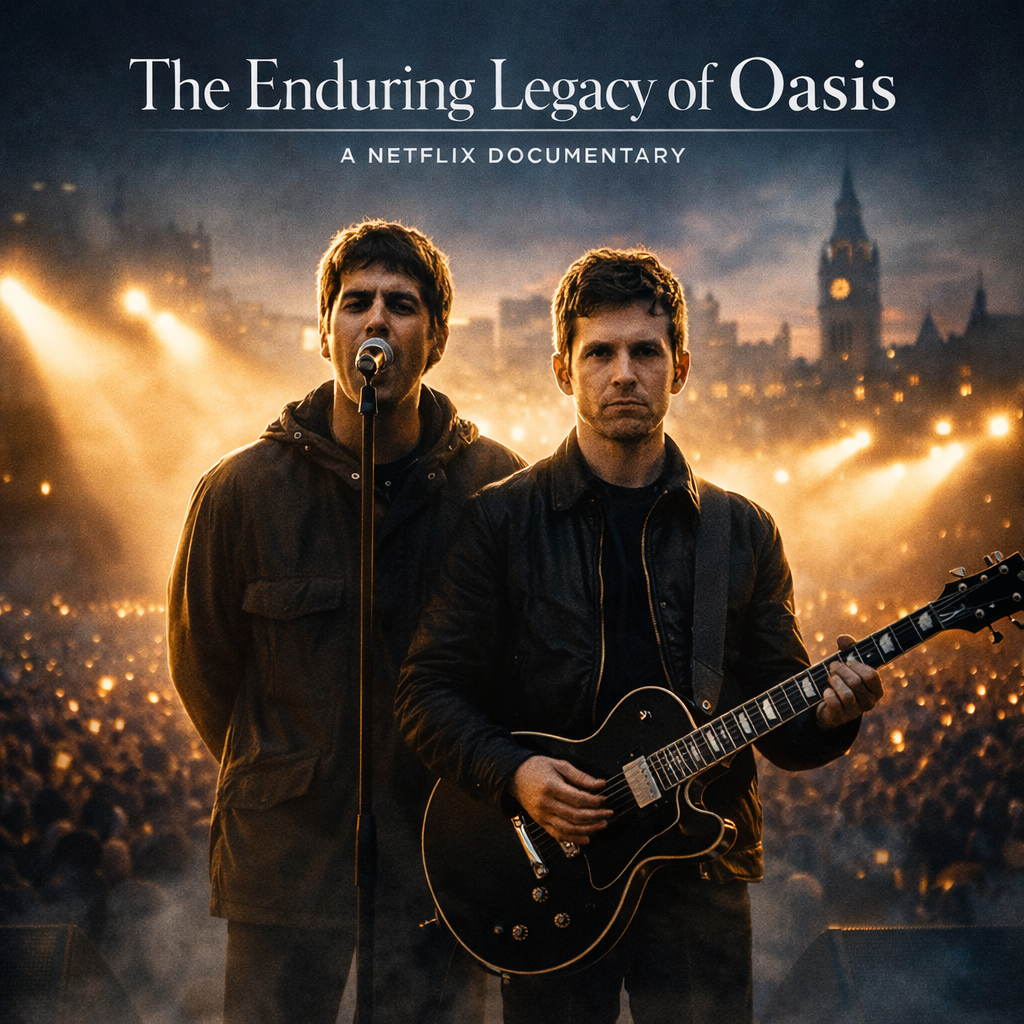
Few bands have shaped British rock culture quite like Oasis, and now their story is being revisited in spectacular fashion through a new documentary from Netflix. Titled The Enduring Legacy of Oasis, the film offers a sweeping, emotional look at the rise, reign, and resonance of one of the most defining acts of the 1990s. More than a nostalgic retelling, it is a carefully crafted tribute to a band whose music continues to echo across generations.
From the very first scenes, the documentary immerses viewers in the gritty streets of Manchester, where the Gallagher brothers first began shaping their sound. Archival footage blends seamlessly with modern interviews, creating a narrative that feels both intimate and expansive. The film captures the raw ambition that propelled the band from local venues to global superstardom.
Central to the story are brothers Liam Gallagher and Noel Gallagher, whose volatile chemistry became both the band’s greatest strength and its most public struggle. Through candid reflections, the documentary explores how their sibling rivalry fueled creativity while also sowing the seeds of eventual conflict. It is a balanced portrayal that neither glamorizes nor diminishes their turbulent dynamic.
The film pays special attention to the cultural explosion surrounding the release of (What’s the Story) Morning Glory?, the album that catapulted Oasis into international fame. With anthems that defined a generation, the record became a cornerstone of the Britpop movement. The documentary revisits the frenzy of sold-out arenas and the electric atmosphere that followed the band wherever they went.
There is also a poignant examination of Oasis’ role in shaping 1990s British identity. As the Britpop era flourished, the band stood shoulder to shoulder with rivals like Blur, sparking headlines and fueling fan debates that became part of music history. The documentary contextualizes this rivalry while celebrating the creative energy it inspired.
Beyond the chart-topping hits, the film highlights quieter moments—studio sessions filled with experimentation, late-night songwriting breakthroughs, and the camaraderie that once held the group together. These glimpses behind the curtain humanize the myth, reminding viewers that even rock legends began as dreamers with guitars.
Visually, the documentary is strikingly elegant. Directors employ cinematic lighting and carefully restored footage to create a timeless aesthetic. The contrast between the chaos of live performances and the calm introspection of present-day interviews gives the film a rhythmic pulse that mirrors the band’s own musical shifts.
Fans will appreciate the inclusion of rarely seen backstage clips and personal anecdotes from collaborators and friends. These stories enrich the narrative, offering new perspectives on well-known milestones. The film becomes not just a chronicle of events, but a layered exploration of influence and inspiration.
One of the documentary’s most compelling themes is endurance. Even after the band’s dramatic split in 2009, Oasis’ music has remained a staple on streaming platforms and festival playlists worldwide. The film suggests that true legacy is measured not only by awards or sales, but by the emotional imprint left on listeners.
The soundtrack, naturally, plays a powerful role. Iconic tracks are reintroduced with renewed intensity, their lyrics resonating differently in today’s cultural landscape. The documentary reminds audiences why these songs continue to feel urgent, hopeful, and defiantly alive.
Critics are already praising the film for its balanced storytelling and polished production. Rather than leaning solely on nostalgia, it invites reflection on the broader impact of art and ambition. It stands as a testament to the enduring pull of authenticity in an ever-changing music industry.
Ultimately, The Enduring Legacy of Oasis is more than a documentary—it is a celebration of a band that dared to dream loudly and live unapologetically. Through its elegant storytelling and emotional depth, Netflix has crafted a portrait that honors the past while acknowledging the lasting ripple effects of Oasis’ sound. For longtime fans and curious newcomers alike, it is a powerful reminder that some legacies never fade.