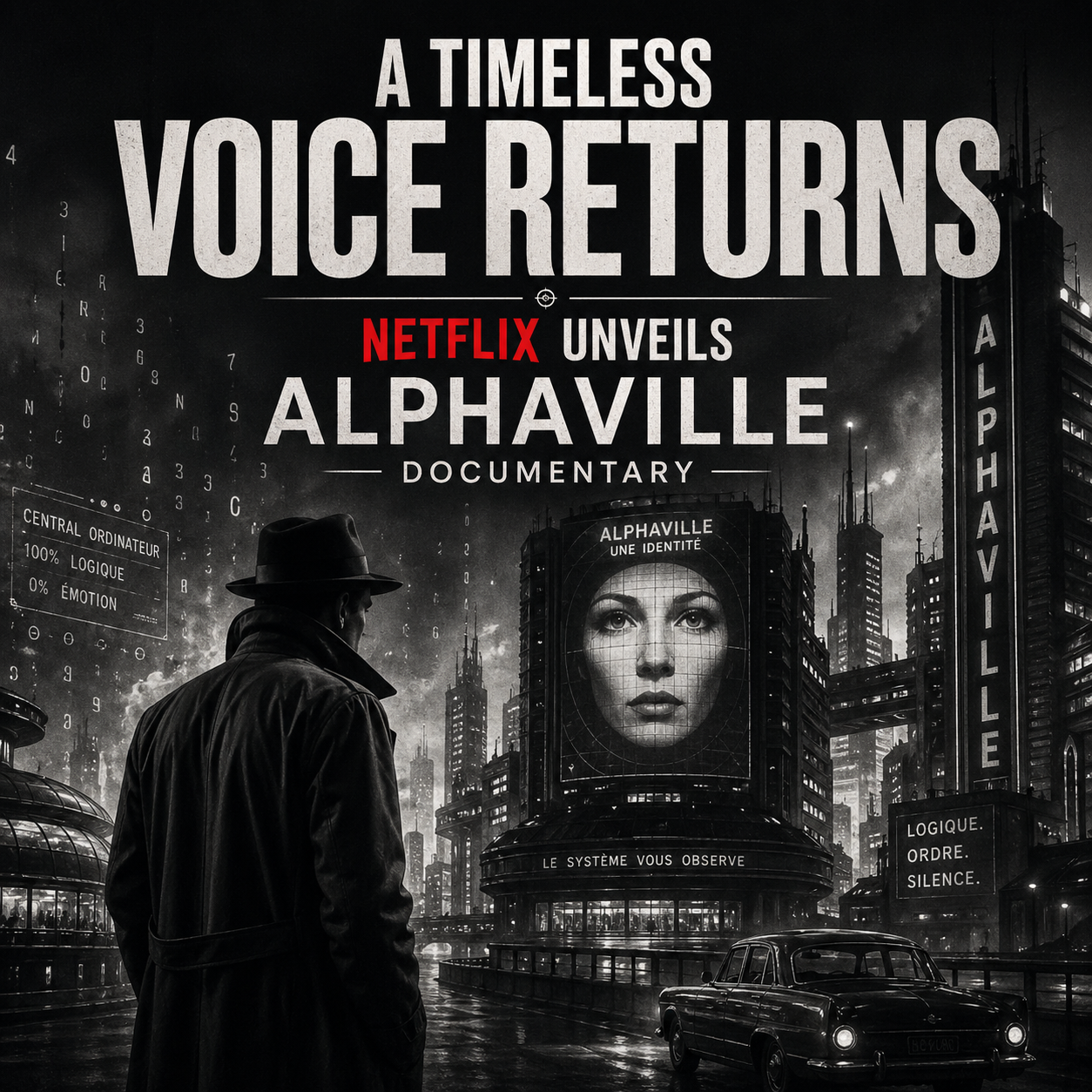
The world of film and music continues to evolve, but some moments are unforgettable. One such moment is Alphaville, a cinematic masterpiece that captured the essence of the 1980s. Now, Netflix has unveiled an exciting new documentary about the film, offering fans and newcomers alike a deep dive into its creation, legacy, and the profound impact it had on modern cinema.
The documentary promises to explore the intricate details of Alphaville’s production, shedding light on the visionary director Jean-Luc Godard and the remarkable cast that brought this dystopian world to life. Released in 1965, Alphaville remains a towering achievement in science fiction, blending futuristic themes with political allegory.
For those unfamiliar with the film, Alphaville is set in a cold, soulless city governed by a supercomputer named Alpha 60. The film’s protagonist, Lemmy Caution, a secret agent played by Eddie Constantine, embarks on a mission to destroy the system controlling the city. It’s a haunting exploration of technology’s potential to suppress individuality and the human spirit.
What makes this documentary even more compelling is its exploration of how Alphaville continues to resonate with contemporary issues. As technology advances and the influence of artificial intelligence grows, Godard’s film offers a chilling glimpse into the potential future we’re rapidly approaching. In the documentary, experts and scholars analyze how the film’s portrayal of a totalitarian regime controlled by a machine feels eerily prophetic in today’s digital age.
Through exclusive interviews and behind-the-scenes footage, the documentary takes audiences on a journey through the making of the film. Viewers will gain an intimate understanding of Godard’s unique filmmaking techniques, which were groundbreaking for the time. From the stark black-and-white cinematography to the minimalist set design, every element of Alphaville was carefully crafted to reflect its bleak, futuristic vision.
As the documentary delves deeper into the cultural significance of Alphaville, it also highlights how the film influenced a generation of filmmakers. From the visual style to the thematic concerns about technology and control, Alphaville left an indelible mark on the world of cinema. Its innovative approach to storytelling continues to inspire filmmakers who seek to explore complex, thought-provoking themes.
The documentary also addresses the impact Alphaville had on music, with its haunting electronic score that perfectly complements the film’s cold, sterile atmosphere. The score, composed by Paul Misraki, remains iconic, and the documentary showcases how it helped establish the mood of the film. The intersection of cinema and music in Alphaville is a key theme that the documentary brings to the forefront.
One of the most fascinating aspects of the film is its subversion of genre expectations. While Alphaville is often categorized as science fiction, it resists easy classification. It combines elements of noir, spy thrillers, and political commentary, making it a rich and multifaceted work that defies simple labels. The documentary captures this complexity, showing how Godard’s vision transcended conventional genres.
The exploration of Alphaville’s legacy would not be complete without touching on its enduring cultural influence. Decades after its release, the film continues to inspire artists, writers, and musicians who draw upon its themes of control, surveillance, and the loss of individuality. The documentary highlights how Alphaville became a touchstone for both the counterculture movements of the ’60s and the postmodern artistic movements that followed.
Viewers of the documentary will also gain insight into the film’s reception at the time of its release. Though Alphaville was initially met with mixed reviews, it has since become a cult classic, admired for its boldness and its critique of societal norms. The documentary takes a critical look at how the film was ahead of its time, addressing themes that were not widely discussed in mainstream cinema at the time.
Perhaps most strikingly, the documentary presents the film as a timeless piece of art that continues to speak to audiences across generations. Despite being over half a century old, Alphaville’s exploration of technological dystopia, artificial intelligence, and the tension between humanity and machinery resonates now more than ever. The documentary makes it clear that Alphaville is not just a film of its time but a film for all times.
As Netflix continues to shine a light on forgotten or overlooked cinematic gems, the Alphaville documentary serves as a reminder of the power of cinema to provoke thought and inspire change. This documentary isn’t just for fans of the film—it’s for anyone who appreciates the ways in which art can shape our understanding of the world.
The Alphaville documentary is a must-watch for cinephiles, music lovers, and anyone interested in the intersection of technology and art. It’s a powerful testament to the lasting relevance of a film that remains as provocative and timely today as it was in 1965.