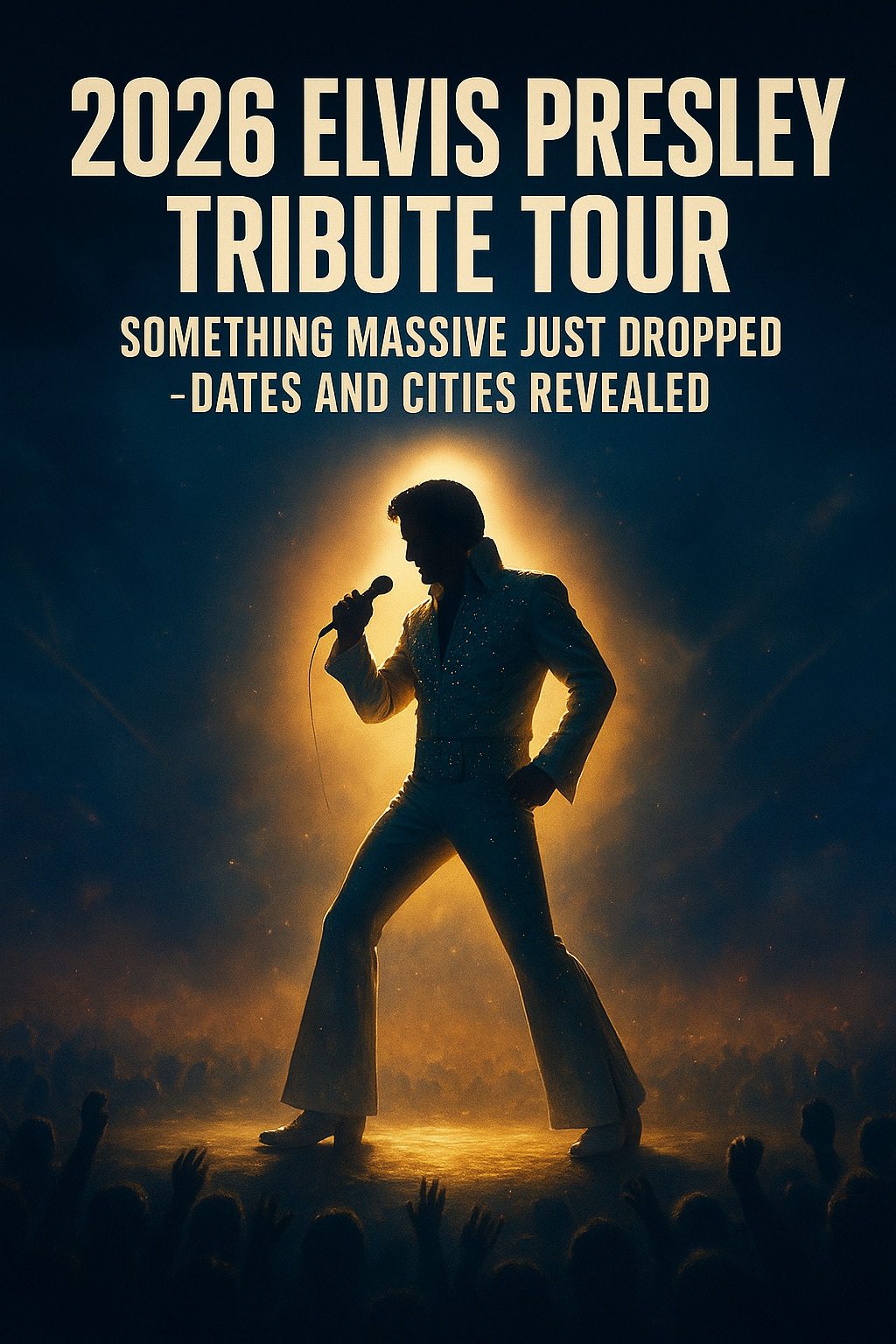
Elvis Presley didn’t just change music—he changed culture. The voice, the hips, the danger parents warned their kids about. He arrived like a lightning strike, rewriting the rules of fame before the world even understood what celebrity truly meant.
But decades later, one uncomfortable question still divides fans:
Was Elvis the ultimate symbol of freedom—or the first global star to lose control of his own identity?
The Birth of a Legend—and a Brand
In the beginning, Elvis felt wild. Unfiltered. Electric. His sound fused gospel, blues, country, and rock in a way that felt rebellious and thrillingly new. He was young America breaking free from restraint.
But almost immediately, the machine formed around him.
Managers, studios, sponsors, schedules—everything designed to shape, protect, and profit from the phenomenon. And while fans celebrate his rise, some quietly wonder:
How much of Elvis was choice, and how much was expectation?
From Dangerous to “Safe”: The Turning Point
Early Elvis was controversial. Parents panicked. Broadcasters censored him. But as his fame grew, something shifted.
The edges softened.
The image polished.
The rebellion became more palatable.
Some fans see this as natural growth. Others see it as the moment Elvis stopped leading the culture—and started being managed by it.
Was this evolution?
Or was it containment?
The Cost of Being Everyone’s Icon
Elvis wasn’t just famous—he was everything to everyone.
A hero.
A heartthrob.
A symbol of youth.
A national export.
And that level of projection comes with a price. As the expectations grew, the room for personal freedom shrank. Fans adored him, but the world demanded consistency. Perfection. Availability.
The controversy isn’t whether Elvis succeeded—it’s whether success left him any space to be human.
Artistry vs. Obligation
Later in his career, Elvis still delivered unforgettable performances. But many fans argue about whether he was creatively fulfilled or simply fulfilling obligations.
Movies. Soundtracks. Tours. Contracts.
Did he choose them—or were they chosen for him?
Some fans believe Elvis was content, doing what he loved. Others feel a sense of quiet tragedy—an artist who gave everything, but rarely got to stop.
The Elvis Fans Don’t Agree On
Ask ten fans about Elvis, and you’ll hear ten different versions of him:
- The rebel
- The romantic
- The patriot
- The prisoner of fame
- The eternal king
And that disagreement is the controversy.
Because loving Elvis often means choosing which version of him to believe in.
Was Elvis Ahead of His Time—or Trapped by It?
Modern conversations about fame, mental health, and artistic control cast Elvis in a new light. Today, artists fight for ownership, rest, and boundaries—things Elvis never publicly had.
That doesn’t diminish his legacy. It complicates it.
And for some fans, complication feels threatening.
Why This Debate Still Hurts
Elvis represents possibility. Dream. Transformation.
So questioning the cost of his legacy can feel like questioning the dream itself.
But honoring a legend doesn’t require pretending the system around him was perfect.
The Real Controversy
Elvis Presley wasn’t just a king.
He was the blueprint.
The first to experience global fame at a scale no one knew how to handle. The first to be loved by millions who never met him. The first to be shaped by an industry that was learning in real time.
And maybe the hardest truth for fans to accept is this:
Elvis didn’t fail the system.
The system didn’t know how to protect Elvis.