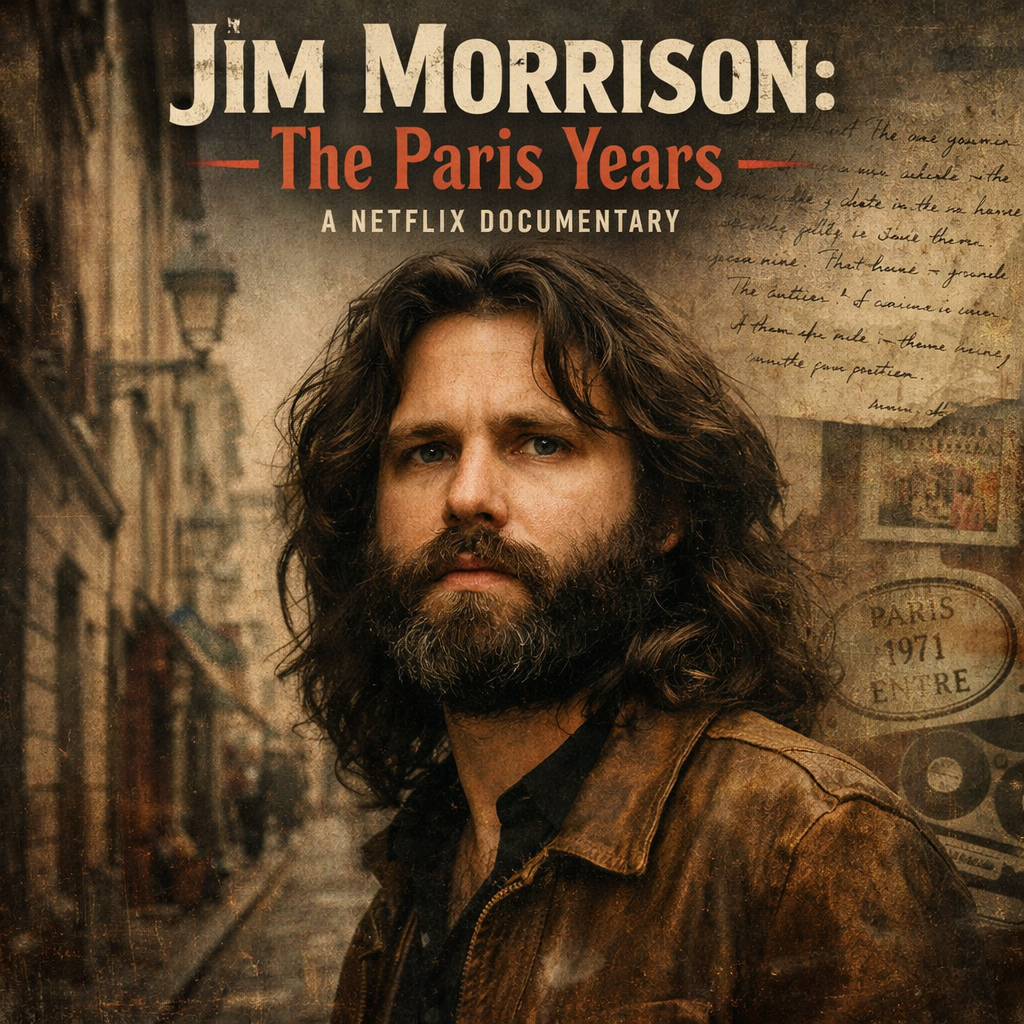
Netflix has ignited a shockwave through music and pop culture communities with the release of the first official teaser for its upcoming Jim Morrison documentary. Long shrouded in mystery, speculation, and myth, the film finally offers a modern lens on one of rock’s most polarizing icons. It’s a project fans have been waiting decades to see materialize, and judging by the early footage, the wait may have been worth it.
The teaser opens with archival clips from The Doors’ most explosive performances—grainy, feverish, and drenched in the psychedelic energy of the late ‘60s. Yet the documentary quickly signals that it aims to go far beyond the clichés and mystique that have defined Morrison for generations. Netflix is positioning this as a definitive work, peeling back layers that previous films and books only hinted at.
What makes the documentary so compelling from the outset is its holistic approach. Rather than isolating Morrison as the tortured poet or self-destructive rock god, the film appears to explore the complexity of a young intellectual who clashed constantly with fame, mortality, and the culture of rebellion that consumed him. It’s a narrative that refuses to flatten him into a stereotype.
The teaser also confirms the involvement of never-before-seen personal writings, letters, studio tapes, and unreleased recordings. These materials—long locked away due to legal battles and estate disputes—promise to reshape our understanding of Morrison not as an enigma, but as a fiercely articulate creator grappling with profound philosophical ideas. For many fans, that access alone makes this documentary historic.
Industry insiders are already calling the Netflix project a major pop culture event, especially given the renewed appetite for deep-dive music documentaries. In recent years, streaming services have transformed musical icons into cultural case studies, presenting their stories with the nuance and archival rigor once reserved for historical figures or political movements.
Central to the documentary’s impact is its portrayal of Morrison’s relationship with Los Angeles—the city that both embraced and devoured him. Through modern cinematography layered against vintage footage, the film draws striking parallels between the counterculture era and the urban sprawl of today’s LA, underscoring how Morrison helped rewrite the city’s artistic identity.
Interviews featured in the teaser include producers, surviving collaborators, and cultural critics, but what stands out most is the documentary’s poetic narration—drawn directly from Morrison’s own journals. Delivered with haunting restraint, it transforms the film into something more literary than biographical. It suggests Morrison is not merely being studied; he is, in a sense, narrating himself from beyond his premature end.
The documentary does not shy away from the darker elements of Morrison’s legacy. Substance abuse, legal controversies, and the psychological strain of overnight fame appear to be explored with maturity rather than sensationalism. Netflix seems intent on dismantling the myth of the reckless frontman while still preserving the raw intensity that made him iconic.
Fans will also be fascinated by how the film handles Morrison’s relationship with The Doors and his evolution as a songwriter. Early footage indicates that the documentary examines creative tensions within the band, the pressures of constant touring, and how Morrison’s literary influences—from French symbolists to Beat poets—became central to The Doors’ sound.
One of the most striking revelations hinted at in the teaser involves Morrison’s plans to potentially leave the music industry entirely. Letters and interviews reveal a man frustrated with the commodification of art and increasingly drawn to filmmaking and poetry—fields he believed offered more room for experimentation and depth. It’s a career trajectory cut short by tragedy.
The timing of this release feels culturally significant. Younger audiences, detached from the mythology of the ‘60s, are encountering Morrison without the distortion of hero worship or generational nostalgia. Netflix seems aware of this and is crafting a documentary that allows the story to stand on its own, grounded in documentation rather than mythmaking.
And then there is the Paris chapter—the final and most mysterious period of Morrison’s life. The teaser only hints at it, but the documentary appears ready to confront long-debated questions surrounding his death, not through conspiracy theories, but through historical context and personal testimony. It’s a respectful approach that still holds space for intrigue.
With the teaser now public, anticipation is soaring. For longtime fans, the documentary represents long-delayed vindication: a chance to see Jim Morrison treated not as a cultural cartoon but as a complex, flawed, visionary artist. For newcomers, it may finally explain why, more than fifty years after his passing, Morrison remains one of the most magnetic figures in rock history.