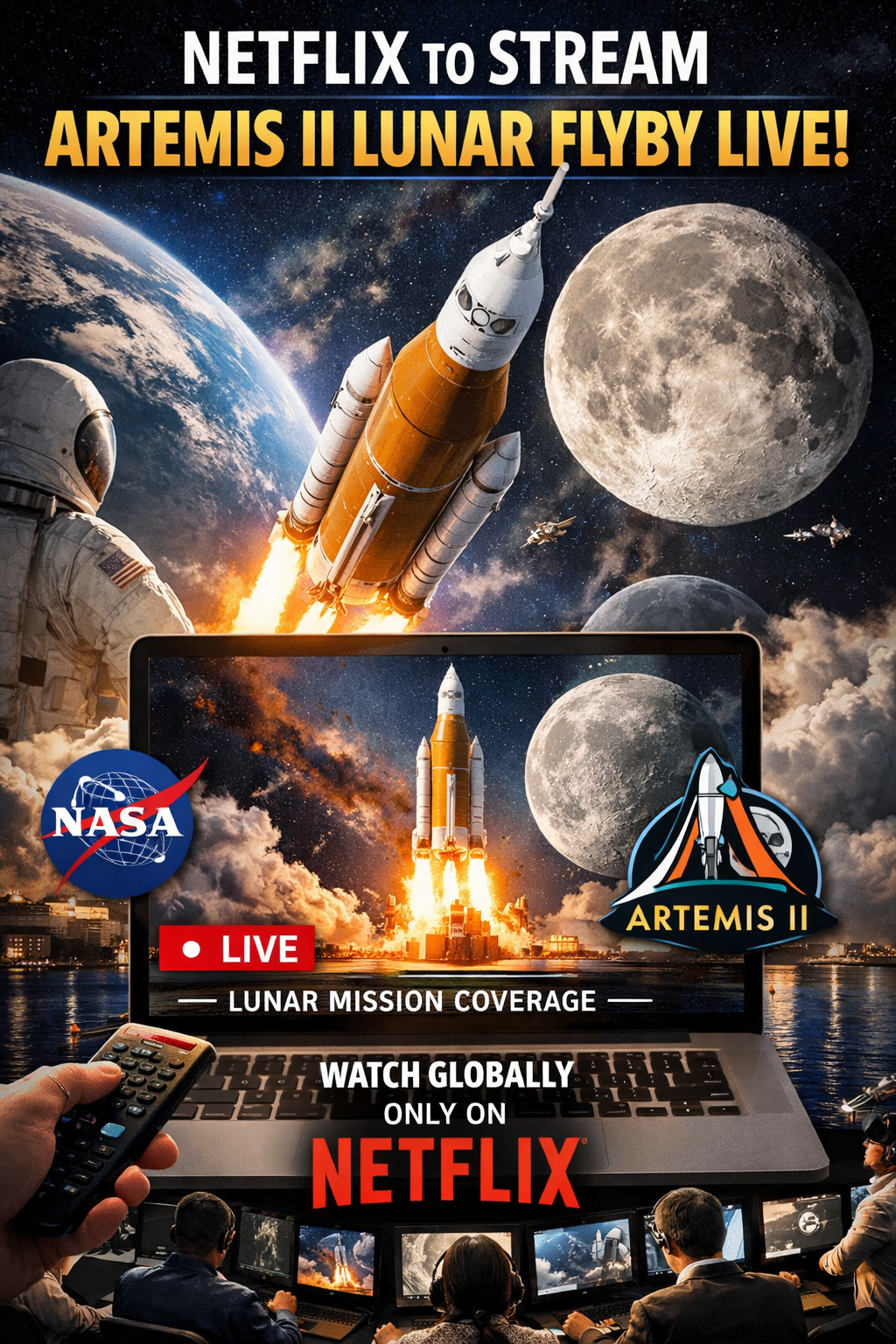
The streaming giant Netflix is making headlines again, this time for stepping far beyond its usual entertainment boundaries. In a surprising and ambitious move, the company has announced that it will air the NASA Artemis II lunar flyby live, giving viewers across the globe front-row access to a historic space mission. This marks a significant shift in Netflix’s strategy as it explores live broadcasting on a global scale..
This decision comes after Netflix missed the opportunity to stream the mission’s original liftoff, which generated massive global interest. Determined not to miss out entirely, the company is now positioning itself as a key platform for the next major phase of the mission. By securing rights to the lunar flyby broadcast, Netflix is tapping into a rare moment that blends science, history, and global curiosity..
The Artemis II mission itself is monumental. It represents the first crewed mission to orbit the Moon in decades, reigniting humanity’s deep fascination with space exploration. Unlike previous missions, Artemis II is designed not just as a technical achievement, but as a symbol of renewed ambition in space travel and future plans to land humans back on the lunar surface..
Netflix’s involvement in broadcasting such a mission signals a broader transformation in how audiences consume live events. Traditionally, events of this magnitude have been reserved for news networks and space agencies’ official channels. Now, streaming platforms are entering the arena, redefining accessibility and audience engagement on a global scale..
For viewers, this means unprecedented convenience. Instead of switching between specialized channels or searching for reliable live feeds, audiences can simply tune in through a familiar platform. Netflix’s user-friendly interface and global reach make it easier than ever for millions of people to witness history unfold in real time..
The company has also hinted at additional features that may accompany the livestream. These could include expert commentary, behind-the-scenes insights, and curated educational content designed to enhance the viewing experience. Such additions would transform the broadcast from a simple livestream into an immersive digital event..
Another key aspect of this move is Netflix’s growing interest in live programming. Over the past year, the platform has experimented with live comedy specials, reality show reunions, and sports-related content. The Artemis II broadcast could serve as a major test of its ability to handle large-scale, high-stakes live events..
Industry analysts believe this could open the door for more partnerships between streaming platforms and global institutions. If successful, Netflix might pursue similar deals involving major scientific, cultural, or even political events. This would further blur the lines between entertainment streaming and traditional broadcasting..
From a competitive standpoint, this move places Netflix in direct competition with platforms like YouTube and traditional television networks that already dominate live event streaming. By securing exclusive or high-profile events, Netflix aims to strengthen its position in an increasingly crowded digital landscape..
For NASA, the partnership offers its own advantages. Broadcasting through Netflix provides access to a massive global audience that may not typically follow space missions. It’s an opportunity to inspire a new generation of viewers and spark widespread interest in science and exploration..
As the date of the lunar flyby approaches, anticipation is building. Social media discussions are already gaining momentum, with users expressing excitement about watching such a historic event through a mainstream streaming platform. This buzz is likely to grow as Netflix releases more details about the broadcast..
Ultimately, Netflix airing the Artemis II lunar flyby is more than just a streaming event—it’s a glimpse into the future of digital media. By combining entertainment technology with real-world historic moments, the company is redefining what it means to “watch” history. And for millions around the world, that history will soon be just a click away..