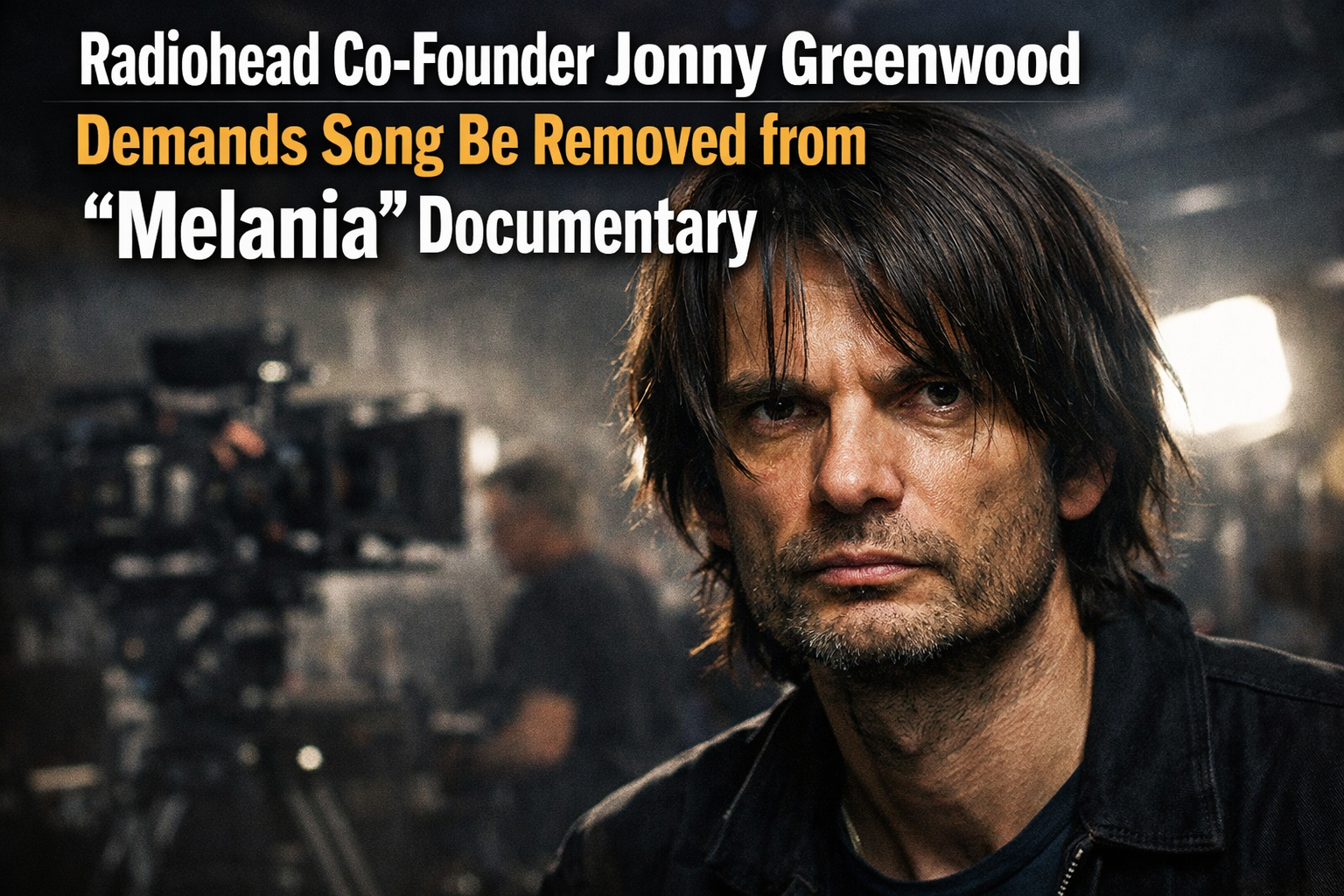
Music fans and documentary watchers alike were stunned this week as Radiohead co-founder Jonny Greenwood publicly demanded that one of his songs be removed from the controversial documentary Melania. The move has ignited a heated debate about artists’ rights, consent, and the ethics of using music in film without permission.
Greenwood, who has long been celebrated for his innovative guitar work and contributions to Radiohead’s signature sound, expressed that he was never consulted about the inclusion of his song. According to sources, the track was featured prominently in a key segment of the documentary, leading Greenwood to take action.
The Melania documentary, which explores the life of the former First Lady, has been controversial since its announcement. Critics have argued that its narrative and use of archival footage may present a biased perspective. Greenwood’s demand adds another layer of scrutiny, bringing attention to how music is licensed and used in films.
This isn’t the first time Greenwood has been vocal about the use of his music. Over the years, he has been protective of Radiohead’s catalog, emphasizing that songs are more than just background noise—they carry intent, emotion, and artistic integrity.
The film’s producer responded to Greenwood’s request, calling it a “blatant misrepresentation” and asserting that proper licensing procedures were followed. The public exchange has fueled debates across social media, with fans taking sides and discussing the broader implications for the music and film industries.
Legal experts note that while licenses can grant filmmakers the right to use music, artists still retain moral rights in many jurisdictions, including the right to object to uses they find prejudicial. Greenwood’s public stance could set a precedent for other musicians seeking greater control over how their work is presented.
Fans have also weighed in on the controversy. Many applaud Greenwood for defending his art, seeing his stance as an important reminder that even world-famous musicians have a say in how their music is used. Others argue that once a song is licensed, filmmakers should have creative freedom to include it as intended.
The timing of Greenwood’s demand has coincided with heightened interest in Radiohead’s activities in 2026. Following their recent tour and Grammy Hall of Fame recognition, the band has been back in the public eye, and Greenwood’s actions only add to the ongoing discussion of their influence on modern music.
Critics of the documentary suggest that Greenwood’s involvement may unintentionally amplify attention to the film. Controversy has a way of drawing eyes, and with a globally recognized musician attached to the dispute, viewership is likely to spike.
Meanwhile, the music industry continues to grapple with questions of consent and rights management. Greenwood’s case highlights the tension between commercial use and artistic control, a debate that is becoming increasingly relevant in the age of streaming and digital content.
For filmmakers, the incident serves as a cautionary tale. Securing licenses is only part of the process; respecting artists’ intentions and consulting them when possible can prevent public disputes and reputational damage. Greenwood’s move emphasizes that creative collaboration requires transparency and dialogue.
As this story develops, both Radiohead fans and documentary enthusiasts are watching closely. Whether the song will ultimately be removed or a settlement reached remains uncertain, but one thing is clear: Jonny Greenwood has once again shown that he fiercely protects the integrity of his art, and the conversation around music rights in film is more relevant than ever.