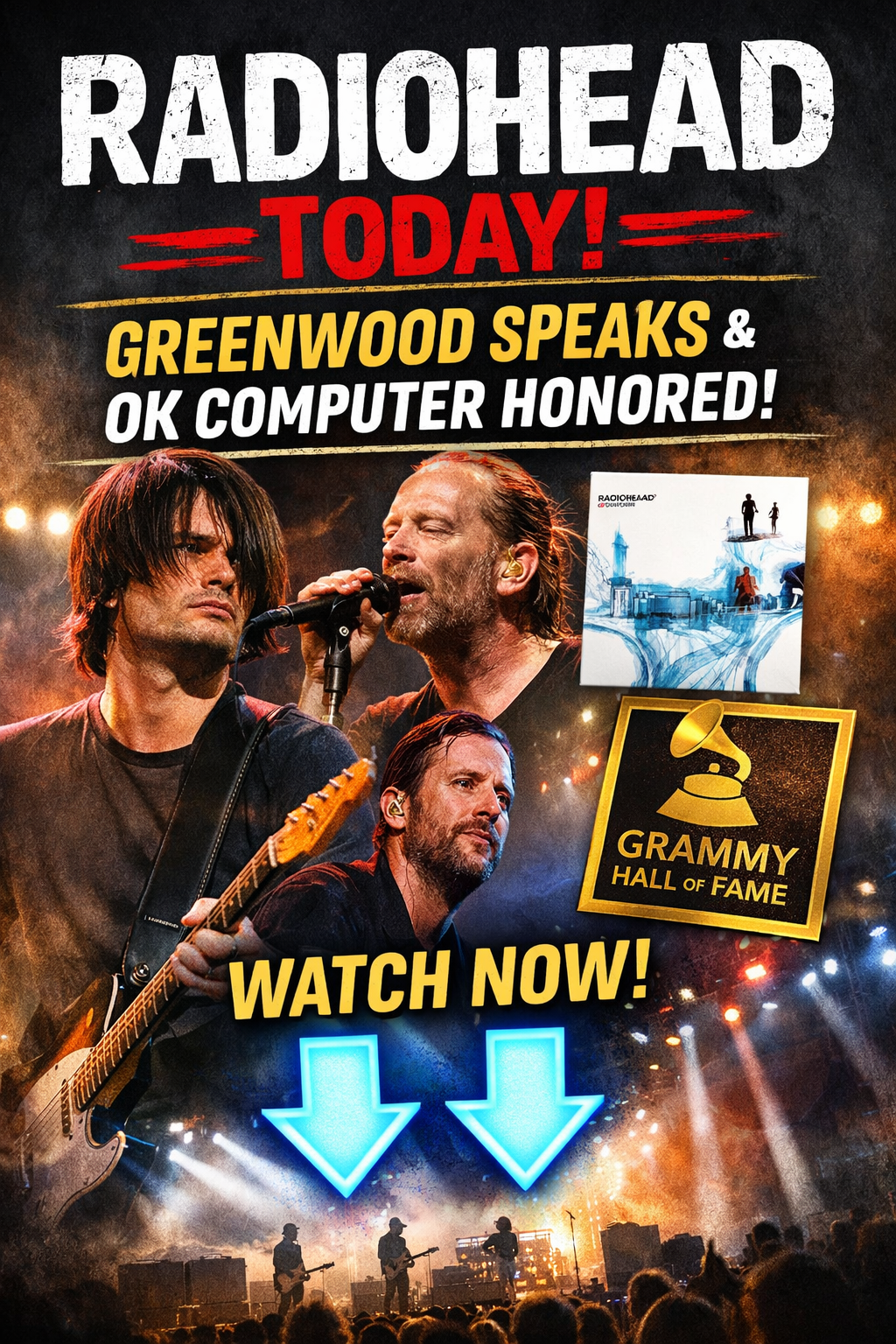
When Radiohead finds itself at the center of political debate, the conversation inevitably stretches far beyond music. This week, guitarist Jonny Greenwood made headlines after stating that music should rise “above politics” amid renewed calls for a tour boycott. His comments have reignited discussion about the role of artists in times of global conflict.
The controversy stems from criticism surrounding the band’s touring history and past performances in politically sensitive regions. Activists have urged fans to reconsider supporting the band, arguing that cultural figures hold influence and responsibility. As a result, what would normally be routine tour promotion has evolved into a wider cultural debate.Greenwood, however, framed his position around the universality of art.
In interviews, he emphasized that music is meant to connect people across borders rather than reinforce divisions. For him, collaboration with artists from different backgrounds is an expression of unity, not a political endorsement.
This perspective is consistent with Radiohead’s long-standing artistic identity. Throughout their career, the band has explored themes of alienation, technology, power, and social anxiety — particularly on landmark records like OK Computer. Yet they have often resisted being boxed into direct political messaging.Critics argue that neutrality itself can be interpreted as a stance. In today’s interconnected world, fans increasingly expect transparency and moral clarity from public figures.
For a band as influential as Radiohead, every decision — from tour stops to collaborations — is viewed through a wider ethical lens.At the same time, supporters defend Greenwood’s remarks as a reminder of art’s independent value.
They believe music should offer refuge, reflection, and emotional release without being reduced to political alignment. In this view, the power of a song lies in its ability to transcend headlines.
The debate also highlights how much the cultural landscape has changed since Radiohead first emerged in the 1990s. Back then, discussions about artists and geopolitics rarely unfolded in real time across social media. Today, reactions are immediate, global, and intense.Amid the controversy, fans are also eager for updates on the band’s creative future.
Greenwood hinted that while there is no immediate announcement of a new album, the door is not closed. He acknowledged that coordinating schedules among band members remains a challenge.Radiohead’s most recent studio album, A Moon Shaped Pool, showcased their continued evolution into orchestral textures and atmospheric production. Since then, individual members have pursued solo projects and film scores, expanding their artistic reach.Greenwood himself has gained acclaim for his work in cinema, reinforcing his identity as a composer beyond the band. These parallel creative paths make any potential Radiohead reunion feel both uncertain and exciting.
Fans understand that when the band returns, it tends to do so on its own terms.Ultimately, Greenwood’s statement that music should rise above politics is less about avoiding difficult conversations and more about defining what art means in divided times. Whether listeners agree or disagree, his comments have sparked meaningful dialogue about creativity, responsibility, and expression.
For now, Radiohead remains both admired and debated — a band capable of stirring emotion not only through melody, but through ideas. And as speculation continues about future work, one thing is certain: whenever they release new music again, the world will be listening