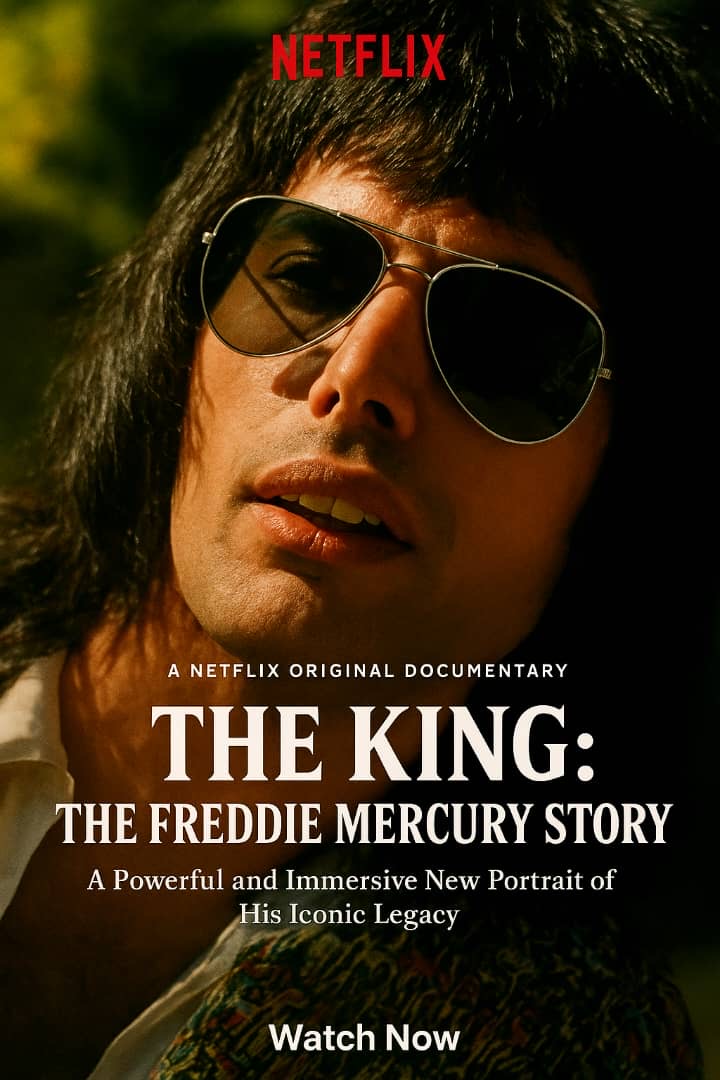
Freddie Mercury remains one of the most extraordinary voices in the history of popular music, decades after his passing. With his unmistakable vocals, magnetic stage presence, and fearless artistic personality, the Queen frontman transformed the possibilities of rock performance. Now, the idea of a powerful Netflix documentary exploring the man behind the legend promises to take audiences beyond the glittering costumes, massive concerts, and unforgettable songs to examine the story of the person who became Freddie Mercury.
Born Farrokh Bulsara in Zanzibar in 1946, Mercury’s journey to international superstardom was anything but ordinary. From his early years and musical development to his eventual meeting with Brian May and Roger Taylor, his life was shaped by ambition, creativity, and an extraordinary determination to make an impact. A documentary centered on his legacy would provide an opportunity to revisit those formative years and reveal how the shy young man from a unique cultural background evolved into one of rock’s greatest performers.
At the heart of Mercury’s story was his voice. His extraordinary vocal range, control, theatrical delivery, and ability to communicate emotion made him instantly recognizable. Whether delivering a delicate ballad or commanding an enormous stadium audience, Mercury possessed an ability that few performers have ever matched. His voice became more than an instrument—it became a defining part of rock history.
But Freddie Mercury was never simply a singer. As Queen developed, he became a creative force whose ideas helped push the band into unexpected musical territory. Songs such as “Bohemian Rhapsody,” “Somebody to Love,” “We Are the Champions,” and “Don’t Stop Me Now” demonstrated his willingness to experiment with structure, genre, harmony, and performance. His music could be theatrical one moment and deeply personal the next.
A compelling documentary would also explore Mercury’s relationship with the stage. Few performers understood the connection between artist and audience as instinctively as he did. His famous interaction with crowds turned concerts into shared experiences, with audiences responding to every gesture, movement, and vocal command. His performance at Live Aid in 1985 remains particularly iconic, demonstrating how a few minutes onstage could capture the attention of millions around the world.
Behind that larger-than-life public persona, however, was a much more complicated individual. Mercury guarded parts of his private life closely, even as his fame grew to extraordinary levels. Exploring his friendships, relationships, family connections, ambitions, insecurities, and personal struggles could provide a more intimate portrait of the man behind the flamboyant performer.
His relationship with Mary Austin is another important part of the story. Their bond remained significant throughout Mercury’s life, evolving beyond the traditional definition of romance into a deep and enduring friendship. A thoughtful documentary could explore how their relationship changed over time and why Austin continued to hold such an important place in Mercury’s personal world.
The documentary would also have to confront the final chapter of Mercury’s life. In 1991, at just 45 years old, he died from complications associated with AIDS. His death sent shockwaves through the music world and transformed the way many people viewed the AIDS crisis. Yet rather than allowing his final years to define his entire story, a sensitive documentary could place them within the broader context of his remarkable life and continuing influence.
Mercury’s legacy did not end with his death. If anything, his cultural impact has continued to grow. New generations have discovered Queen through streaming platforms, documentaries, films, social media, and live performances. His image and music remain instantly recognizable, while his influence can still be heard in artists who embrace theatricality, individuality, and complete creative freedom.
The worldwide success of Bohemian Rhapsody introduced Mercury and Queen to another generation, further demonstrating the enduring fascination with his story. While dramatized films can capture the spectacle of a superstar’s life, a documentary can potentially go deeper through archival footage, interviews, photographs, recordings, and firsthand perspectives from people who knew him.
A Netflix production devoted to Mercury could therefore become more than another music documentary. It could be an exploration of identity, ambition, artistry, fame, love, vulnerability, and legacy. By placing the extraordinary performer alongside the private individual, the story could remind viewers that behind the legendary voice was a complicated human being who spent his life creating something unforgettable.
Freddie Mercury may be gone, but the King continues to live through the music. Every time “Bohemian Rhapsody” begins, every time a crowd sings “We Will Rock You,” and every time a new listener discovers Queen, another piece of his legacy comes alive. A powerful documentary celebrating his journey would ultimately tell a timeless story: some artists become famous, some become icons, but very few become immortal. Freddie Mercury remains one of them.